Welcome to Rolf Luft Foundation for Diabetes Research

The Rolf Luft Foundation for Diabetes Research was established in 2004 with its primary goal to support research on diabetes and its complications. Through our Awards and scholarships, we wish to stimulate scientific innovation on all levels. Our vision is a future where diabetes no longer exists, or can be cured completely.

Latest News

Rolf Luft Award 2026

Professors Richard DiMarchi and Matthias Tschöp are awarded the Rolf Luft Award 2026 for groundbreaking scientific contribution in diabetes and obesity with research leading to important clinical implications. (More)

Kerstin Brismar Award 2025

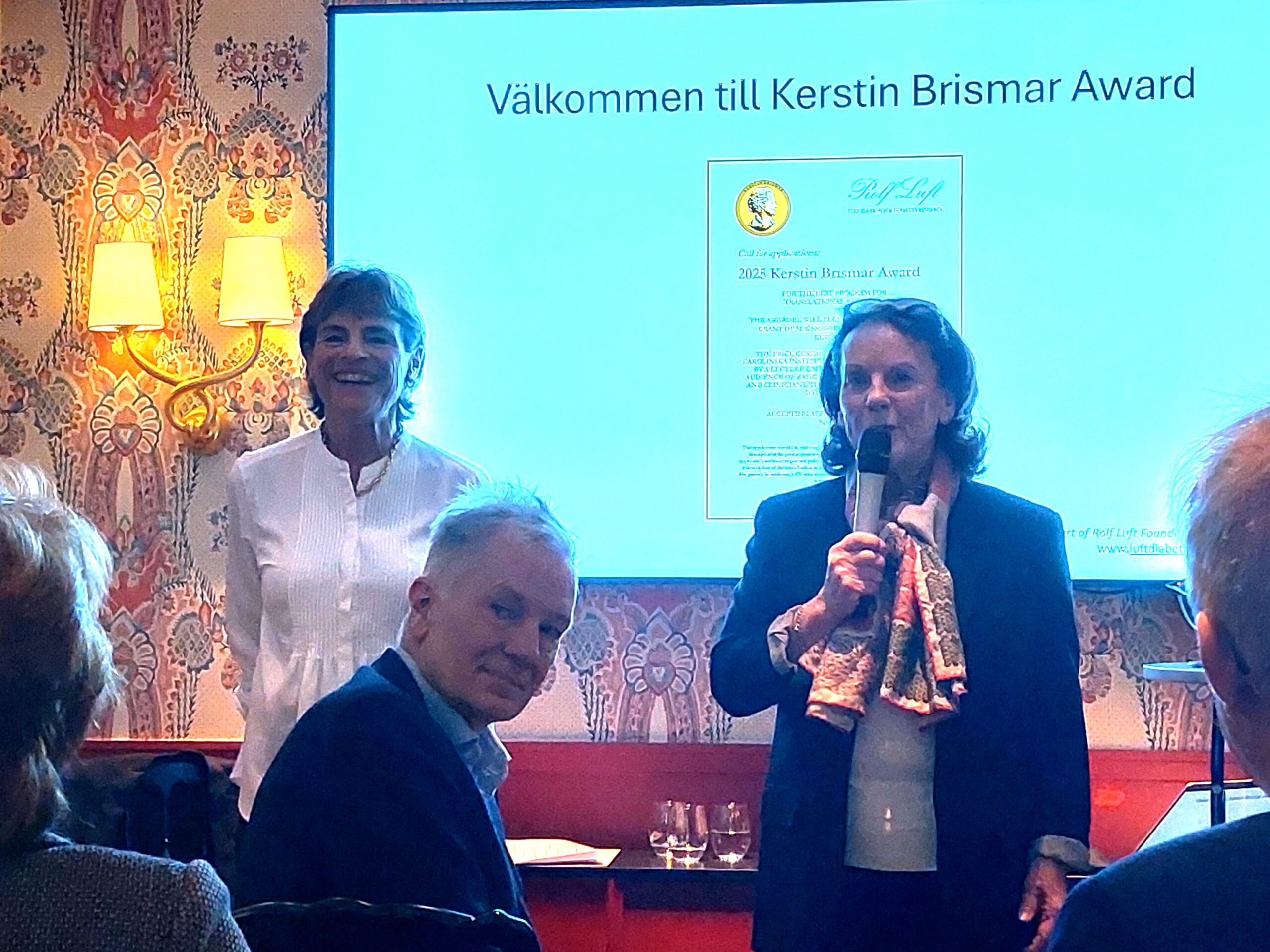
The first winner of the Kerstin Brismar Award has been announced. This year’s award goes to Professor Johnny Ludvigsson at Linköping University. Read the Award Committee’s motivation here.

Rolf Luft Award 2025

Professor Ronald M Evans at The Salk Institute (La Jolla) receives the Rolf Luft Award 2025 for his pioneering efforts in research on nuclear hormone receptors and their role in physiology and metabolic diseases. (Read more.)

About the Foundation

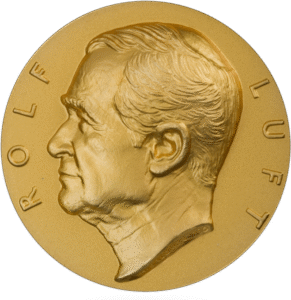
The Rolf Luft Foundation for Diabetes Research was established in 2004 by Professor Rolf Luft and Professor Kerstin Brismar. The purpose of the foundation is to support and promote research into the causes and treatments of diabetes and its complications, as well as promote teaching at all levels in the field. An important part of the foundation’s activities is also to bestow an annual prize, the Rolf Luft Award, to an outstanding researcher for exceptional contributions in endocrinology, metabolism and/or diabetes research. (Read more here.) The award consists of a medal, diploma and prize money. From the year 2025, the foundation will also award the Kerstin Brismar Award to exceptional researchers in translational research. (Read more here.)

Give a grant

The foundation gratefully accepts financial contributions from private individuals, organizations and companies. If you wish to support us in our work to be able to prevent, treat and perhaps even completely cure diabetes and other endocrinological and metabolic diseases in the future, please contact us through the Contact page.

Scholarships

The foundation awards scholarships to young diabetes researchers, post docs and doctoral students at Swedish universities to support their research work on diabetes and related diseases. The scholarship enables young researchers to visit research groups at other universities to learn more and expand their work. (Read more here.)

Learn more

Much knowledge is available worldwide on diabetes type 1 and 2, both as scientific research findings and as general guidance. On the Resources page, we present a selection of books and articles on the topic, as well as tips on websites where you can turn for further information. On the Webinars page, we plan to share recent online events.

From the Blog

Winners of Rolf Luft Award 2026

Rolf Luft Award
Professor Richard DiMarchi and Professor Matthias Tschöp Richard Dennis Di Marchi (at Indiana University, Bloomington, USA) and Matthias Tschoep (at Ludvig Maximillian University, Munich, Germany) are awarded the Rolf Luft Award 2026 for groundbreaking scientific contribution in diabetes and obesity,…

Winner of Kerstin Brismar Award 2025

Kerstin Brismar Award
I feel very honored to receive this first prize in Kerstin Brismar’s name and hope that it will contribute to us defeating Type 1 diabetes!”, says Johnny Ludvigsson. Professor Johnny Ludvigsson, senior researcher at Linköping University and founder of the…

Launch of the Kerstin Brismar Award

On 30 January this year, a new award, the Kerstin Brismar Award, was launched by Rolf Luft’s Foundation for Diabetes Research. Starting in 2025, the prize will be awarded to particularly significant research projects in translational research in the field…

Latest from Youtube

More research is needed

In the last 30-40 years, the living conditions of diabetics have improved considerably. This is mainly thanks to the diabetes research that has been conducted in Sweden and globally. But there is still a lot of research to be done so that people with diabetes can have as good a life as healthy people, and ultimately, that the disease can be avoided completely in the future. This however requires financial resources.

Every day, many Swedish children, young people and adults contract type 1 diabetes. Today, 70,000 Swedes have this form of diabetes, which requires daily doses of insulin. Currently, this means insulin injections 3-4 times a day and also many blood sugar tests. These persons live with constant concern for a possible severe drop in blood sugar level, which in the worst case can lead to convulsions and even unconsciousness (insulin coma).

Even more adults develop type 2 diabetes, which used to be called age-related diabetes. Nine out of ten diabetics have type 2 diabetes. It has also become more common for overweight and obese children to suffer from this form of diabetes. Because the symptoms of type 2 diabetes are often unclear, a person may have had the disease for several years before it is discovered. By then various organs in the body may already have become damaged.

Thanks to intensive research, it is now possible to reduce the risk of complications arising from diabetes and, if they do occur, reduce their effect. In the past, it was common for people with diabetes to go blind or suffer serious kidney damage, and for children and adolescents with diabetes to fall unconscious (insulin coma) due to sudden and severly low sugar levels. Birth defects were also more common. These risks have been significantly reduced, among other things, due to the ability to keep an even/stable and good blood sugar level by allowing diabetics to test their blood sugar themselves. But still, for example, impaired blood circulation in diabetics can lead to amputation of the foot and leg. Likewise, diabetes means an increased risk of stroke, heart attack and a shortened lifespan. Significant research efforts are required so that complications resulting from diabetes can be completely avoided.

Research and development are of utmost importance. Having the financial resources to enable the needed research and development of new methods that allow prevention, early detection and effective treatment of diabetes is therefore of the utmost importance for people with diabetes and those who are at risk of suffering from diabetes.

Not only is such research and development activities important for those who suffer from diabetes, but also for public health sector at large. Better diagnosis and treatment methods ultimately lead to a reduced number of sick leave and an increase in working capacity of the working segment of society. As much as 90% of Swedish diabetes research is currently dependent on external donations.

Welcome to support the important diabetes research! Learn more here.